
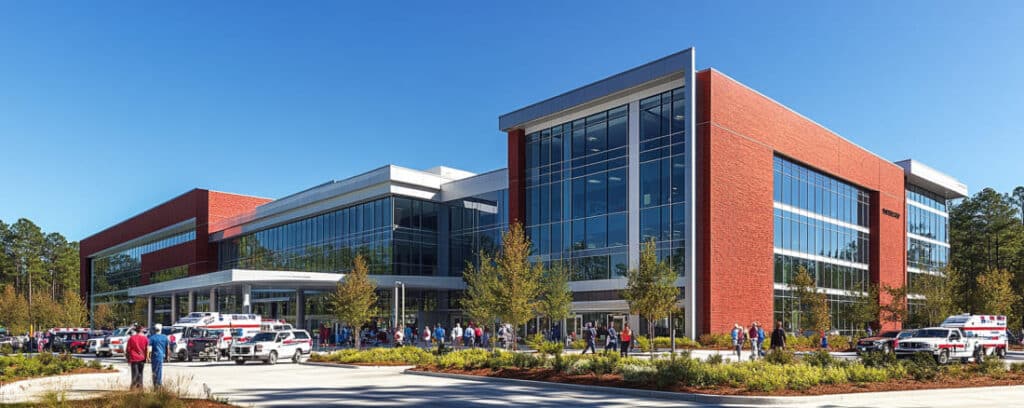
For those looking to transition into the nursing profession swiftly, online Accelerated Bachelor of Science in Nursing (ABSN) programs offer an ideal pathway. These programs are specifically designed for students who already hold a bachelor’s degree in another field but are seeking to enter the nursing profession. In Georgia, there is a growing demand for nurses, driven by a combination of an aging population, advancements in healthcare technology, and the expanding healthcare infrastructure.
Online ABSN programs in Georgia allow students to complete their nursing education more flexibly, often within 12 to 18 months, making it an attractive option for career changers or those looking for a fast track into healthcare. However, it is important to note that while many components of ABSN programs can be completed online, hands-on clinical practice remains essential to nursing education. This article will explore the best ABSN programs available in Georgia, helping prospective students make informed decisions about their future in nursing.
What Is an ABSN Program?
Accelerated Bachelor of Science in Nursing (ABSN) programs are designed for individuals who already hold a bachelor’s degree in another field and want to pursue a career in nursing. These programs offer a fast-paced curriculum that enables students to earn their BSN in a shorter timeframe, typically between 12 to 18 months, compared to traditional four-year nursing programs.
Key Characteristics of ABSN Programs:
- Intensive Coursework: ABSN programs condense a large amount of coursework into a shorter period, requiring students to complete their nursing education more rapidly. Students engage in rigorous classes that cover essential topics such as anatomy, pharmacology, and patient care.
- Clinical Experience: While many ABSN programs offer online components, they still require clinical placements. These hands-on experiences, conducted in local healthcare facilities, are crucial for students to apply their theoretical knowledge in real-world settings.
- Eligibility Requirements: Prospective students must hold a bachelor’s degree in a non-nursing field and meet any prerequisite course requirements, such as courses in biology, chemistry, or psychology, before applying.
How ABSN Programs Differ from Other Nursing Programs
While ABSN programs offer an accelerated path to becoming a registered nurse (RN), it’s important to distinguish them from other fast-track programs like RN-to-BSN. RN-to-BSN programs are designed for licensed RNs looking to earn their bachelor’s degree, whereas ABSN programs are for individuals who are not yet nurses but hold a bachelor’s degree in another field. Additionally, ABSN programs are typically more intensive and shorter in duration compared to traditional or RN-to-BSN programs.
Online ABSN Programs in Georgia
While Georgia offers many excellent accelerated Bachelor of Science in Nursing (ABSN) programs, there are no fully online ABSN pathways to initial RN licensure. Some programs do offer hybrid or distance-based formats that allow students to complete didactic coursework online while still participating in required in-person clinical, skills, and simulation experiences.
Why Are Online ABSN Programs Rare?
One of the primary reasons for the limited availability of fully online ABSN programs is the hands-on nature of nursing education. Clinical skills must be practiced in a supervised, real-world environment to ensure that students are adequately prepared for their future roles as registered nurses. Additionally, nursing education is highly regulated, and accreditation bodies, such as the Commission on Collegiate Nursing Education (CCNE), require clinical experiences as part of program curricula.
Online vs. Hybrid ABSN Programs in Georgia
There is no fully online ABSN pathway to initial RN licensure in Georgia. While some schools use terms such as “online ABSN,” “distance ABSN,” or “online coursework,” these programs still require students to complete hands-on components in person.
In an online or hybrid ABSN program, the didactic portion of the curriculum—such as nursing theory, lectures, readings, discussions, and some assignments—may be delivered online. However, students must still participate in required clinical rotations, skills training, and simulation experiences in person. These components give students supervised experience applying nursing knowledge and developing the practical skills required for patient care.
The Georgia Board of Nursing allows prelicensure nursing programs to use a combination of on-site, distance-learning, and online teaching methods, but clinical learning activities cannot be completed exclusively through electronic formats.
For prospective students, this distinction is important when comparing programs. An ABSN advertised as “online” should not be interpreted as a program that can be completed entirely from home. Instead, students should review where clinical rotations, simulation labs, and other in-person requirements take place and determine whether travel or relocation may be necessary.
Accredited ABSN Programs in Georgia
Below is a list of accredited accelerated and second-degree BSN programs in Georgia. Some programs offer online or hybrid coursework, while others are primarily campus-based. Regardless of format, prelicensure nursing programs include in-person clinical and hands-on learning requirements.
| School | Program | Online or Hybrid Coursework? |
| Albany State University | Accelerated (2nd Degree) BSN | Limited — primarily on campus; some courses may be online or hybrid, but availability is not guaranteed |
| Augusta University | Accelerated BSN | No — campus-based |
| Brenau University | Accelerated Bachelor of Science in Nursing | Yes — Hybrid — online coursework with in-person skills labs and clinical experiences |
| Emory University | Distance Accelerated BSN | Yes — Distance — distance-based coursework with required in-person clinical experiences |
| Georgia Southern | Accelerated Bachelor of Science in Nursing (ABSN) | No — in-person at the Armstrong Campus |
| Georgia Southwestern State University | Second Degree BSN Program | No — campus-based |
| Kennesaw State University | Accelerated B.S. in Nursing | No — face-to-face |
| Mercer University | Second Degree Accelerated BSN | Yes — Hybrid/Online coursework — asynchronous online classroom learning with in-person exams, labs, and clinical practice |
| Middle Georgia State University | Accelerated BSN | No — classroom instruction with in-person clinical training |
| Valdosta State University | Accelerated Bachelor of Science in Nursing | No — campus-based |
Albany State University’s Accelerated (2nd Degree) BSN is designed for students who already hold a bachelor’s degree in another field. The nursing sequence runs for five consecutive semesters, including one required summer semester. Courses are primarily offered on Albany State’s campuses, although some may be delivered online or in a hybrid format; the university does not guarantee online availability. Clinical experiences take place in skills and simulation labs and at healthcare facilities in the surrounding area.
Middle Georgia State University launched its Accelerated BSN program in September 2025, with the first cohort beginning in January 2026. The fast-track program is designed for students who already hold a bachelor’s degree in another field and can be completed in four semesters, or about 17 months. Students move among the Warner Robins, Macon, and either Macon or Dublin campuses during the program and complete extensive hands-on clinical training in healthcare settings.
Program Spotlight
For prospective nursing students seeking an accelerated path to their BSN in Georgia, two standout programs are offered by Emory University and Mercer University . These institutions provide ABSN programs designed to fast-track nursing education while maintaining a commitment to academic excellence and hands-on clinical training.
Emory University Distance ABSN Program
Emory University offers a Distance Accelerated Bachelor of Science in Nursing (DABSN) program designed for students with a non-nursing bachelor’s degree, allowing them to earn their BSN in as few as 12 months. The program is unique in that it caters to students living outside the Atlanta metro area, providing access to Emory’s renowned education through a distance-based learning model.
Key Program Features:
- Flexible Distance Learning: Students complete the majority of their coursework through real-time online classes with live faculty via synchronous sessions. This virtual learning is supplemented with recorded content and active learning techniques that emphasize critical thinking.
- Small Class Size: With cohorts limited to 30 students, the program fosters a collaborative learning environment, allowing for personalized attention from faculty.
- Clinical Rotations: Clinical experiences are a blend of on-campus intensives in Atlanta and local clinical rotations near the student’s residence. Students participate in two on-campus clinical sessions: one during the first semester and a capstone session in the final semester. The program encourages students to complete clinical rotations in high-need or underserved areas to address nursing shortages.
- One-on-One Preceptorship: Emory’s DABSN program assigns each student a one-on-one preceptor, ensuring a focused learning experience. This model differs from many nursing programs where students work in groups under a preceptor.
Admissions and Structure:
- The program offers three start dates per year (August, January, May), making it convenient for students to begin at a time that suits their schedule.
- The DABSN requires the completion of 48 credit hours over three continuous semesters. Students are prepared to sit for the NCLEX-RN exam by the end of the program, positioning them for immediate entry into the nursing workforce.
- Students are expected to participate in on-campus clinical intensives that cover essential hands-on training, simulation exercises, and NCLEX preparation. Travel and accommodation costs for these sessions are included in tuition.
Emory University DABSN Program Cost
The Emory University DABSN program costs approximately $82,000 over three semesters, with tuition billed based on the number of credit hours taken each semester. There are also additional online fees per semester and a one-time laboratory fee.
- Total Estimated Cost: $82,000
- Additional Fees: Emory assesses an online learning fee each semester, and a one-time laboratory fee.
- Textbooks and Course Materials: Estimated at $1,500 for the entire program, with efforts made to limit these expenses.
Mercer University ABSN Program in Atlanta
Mercer University offers a Second Degree Accelerated Bachelor of Science in Nursing (ABSN) program that allows students with a non-nursing bachelor’s degree to earn their BSN in as few as 12 months. This full-time, fast-paced program is designed to give students the comprehensive knowledge and skills needed to launch a successful nursing career.
Key Program Features:
- Flexible Learning Model: The ABSN program combines online coursework through the Canvas platform with hands-on training in state-of-the-art skills and simulation labs located at the Atlanta learning site.
- Clinical Experience: Students gain practical experience in diverse healthcare settings across the Atlanta metropolitan area, ensuring exposure to a variety of patient care environments.
- Supportive Faculty: Mercer prides itself on offering strong faculty support. Instructors are accessible through online Q&A sessions, phone calls, emails, and in-person meetings, providing guidance throughout the program.
- Values-Based Education: The curriculum is grounded in Mercer’s core values of Christian caring, compassion, integrity, collaboration, and social responsibility, ensuring students graduate with both the technical skills and ethical foundation required for nursing.
Admissions and Start Dates:
- The ABSN program offers three start dates each year, making it easier for students to begin their nursing education on a timeline that works for them.
- Students are prepared for the NCLEX-RN exam, the national licensure test that all nursing graduates must pass to become registered nurses.
Mercer University ABSN Program Cost
The Mercer University ABSN program spans three semesters and consists of 56 credit hours. The total tuition cost for the program is $59,865, with additional nursing and university fees totaling $2,805.
- Total Tuition: $59,865
- Nursing and University Fees: $2,805
- Other Costs: Additional expenses such as an application fee, health insurance, books, uniform, and transportation are not included in the tuition and may vary.
What to Look for in ABSN Programs
When considering an accelerated BSN program, it’s essential to identify the key factors that align with your academic and career goals. Here are some important elements to consider:
Accreditation and Its Importance
Accreditation is a critical factor for any nursing program. For ABSN programs, it’s essential to ensure that the program is accredited by recognized bodies such as the Commission on Collegiate Nursing Education (CCNE) or the Accreditation Commission for Education in Nursing (ACEN). Accreditation guarantees that the program meets rigorous academic and professional standards, which is crucial not only for ensuring a quality education but also for eligibility for licensure exams like the NCLEX-RN. Enrolling in an accredited program also makes it easier to transfer credits if needed and can open doors for financial aid opportunities.
Georgia History and Constitution Requirements
Students considering an ABSN program within the University System of Georgia (USG) should also be aware of the state’s legislative requirements for undergraduate degrees. Before graduating, USG students must satisfy requirements covering U.S. history, Georgia history, the U.S. Constitution, and the Georgia Constitution. These requirements also apply to students pursuing a second bachelor’s degree.
For second-degree students whose first bachelor’s degree was earned outside the University System of Georgia, these requirements may be satisfied through approved coursework or qualifying examinations. Students who already have transfer credit for U.S. history or American government may still need to satisfy Georgia-specific history or Constitution requirements if their previous coursework did not cover that material.
Because the exact way these requirements are applied can depend on the institution and a student’s prior coursework, prospective ABSN students should review their transcript evaluation and confirm any outstanding requirements with their school.
Program Type and Specializations
While ABSN programs provide a pathway to earning a BSN, some programs offer additional focus areas or specializations, such as pediatric nursing, critical care, or mental health nursing. If you have a specific area of interest within nursing, it’s worth exploring programs that offer coursework or clinical rotations tailored to your specialization.
Program Formats
The format of an ABSN program is a major consideration, especially for students seeking flexibility. While most ABSN programs are intensive and may require full-time study, some programs offer hybrid models that combine online learning with in-person clinical rotations. Hybrid and online formats can provide the flexibility needed to balance studies with other responsibilities, but make sure to understand the in-person clinical requirements.
Curriculum and Faculty
A well-rounded curriculum is essential for developing both the theoretical knowledge and clinical skills necessary for a successful nursing career. Look for programs that offer a balanced mix of classroom instruction, lab work, and clinical experiences. Additionally, research the qualifications of the faculty—programs with experienced, active nurses or those involved in healthcare research can provide valuable insights and mentorship.
Geographic Location and Clinical Placements
Consider where the school is located and where you’ll be completing your clinical rotations. Some programs have partnerships with local hospitals and healthcare facilities, providing opportunities for hands-on learning in diverse environments. Clinical placements in high-demand healthcare settings can offer real-world experience and networking opportunities for future employment.
Program Costs and Financial Aid
While pursuing an ABSN can be a significant financial investment, researching tuition costs and the availability of financial aid is essential. Many schools offer scholarships, grants, and loan options for nursing students. Understanding the total cost of the program and how it aligns with your financial situation is an important step in your decision-making process.
By carefully considering these factors, you can choose an ABSN program that best fits your personal needs and sets you up for success in your nursing career.
Nursing Careers in Georgia
Georgia presents a favorable environment for current and aspiring nurses due to its strong demand for healthcare services, a growing population, and a need for qualified nursing professionals. The state also employs a large registered nursing workforce, creating opportunities for nurses across hospitals, outpatient facilities, long-term care settings, and other healthcare environments.
Factors That Make Georgia Favorable for Nurses
- Growing Healthcare Demand: Population growth, an aging population, and the prevalence of chronic health conditions continue to contribute to demand for healthcare services. Registered nurses are needed across a wide range of settings, including hospitals, outpatient care centers, home health services, and residential care facilities.
- Expanding Hospital Networks: Georgia is home to large hospital networks, such as Piedmont Healthcare and WellStar Health System, which employ nurses across numerous facilities and specialties. Large healthcare systems may also provide opportunities for continuing education and career advancement.
- A Large RN Workforce: According to the U.S. Bureau of Labor Statistics (BLS), Georgia employed approximately 100,950 registered nurses as of May 2025, making nursing a significant part of the state’s healthcare workforce.
Job Outlook and Salary for Nurses in Georgia
According to the U.S. Bureau of Labor Statistics, employment of registered nurses nationwide is projected to grow by 6% from 2025 to 2035, faster than the average for all occupations. BLS projects approximately 180,800 openings for registered nurses each year, on average, during that period. Many of these openings are expected to result from both employment growth and the need to replace nurses who leave the occupation or retire.
The latest BLS Occupational Employment and Wage Statistics data also provide an updated picture of RN earnings in Georgia:
- 2025 Median Salary: The annual median wage for registered nurses in Georgia was approximately $93,550.
- Employment: Georgia employed approximately 100,950 registered nurses as of May 2025.
- Career Advancement: Earnings can vary based on experience, geographic location, employer, shift, and area of practice. Nurses who pursue advanced education, certifications, or leadership roles may qualify for additional career opportunities and potentially higher compensation.
For ABSN graduates, these figures illustrate a sizable nursing workforce and continued national demand for registered nurses. Actual job opportunities and salaries in Georgia will vary by region, employer, specialty, and level of experience.
Tips for Paying for a Nursing Degree
Earning a degree in nursing, especially an ABSN, can be a significant financial commitment. However, there are several resources and strategies prospective students can explore to reduce the financial burden and make their nursing education more affordable.
1. Scholarships and Grants
Nursing students can apply for a wide range of scholarships and grants that do not require repayment. Many organizations, including hospitals, nonprofits, and nursing associations, offer scholarships based on merit, need, or demographics. Some examples include:
- The American Association of Colleges of Nursing (AACN) provides financial support for nursing students through scholarships and grants .
- The Health Resources and Services Administration (HRSA) offers the Nurse Corps Scholarship Program , which can cover tuition, eligible fees, other educational costs, and provide a monthly stipend in exchange for a commitment to work at an eligible healthcare facility with a critical shortage of nurses after graduation.
- State-specific scholarships, like the Georgia Nurses Foundation Scholarships , also help offset costs for nursing students.
2. Federal Financial Aid
Completing the Free Application for Federal Student Aid (FAFSA) is still an important step for ABSN students seeking financial assistance, but second-degree students should be aware that their federal aid options may differ from those available during their first bachelor’s degree.
Most ABSN students are not eligible for Federal Pell Grants because Pell Grants are generally limited to undergraduate students who have not already earned a bachelor’s, graduate, or professional degree. Since ABSN programs are typically designed for students who already hold a bachelor’s degree, Pell Grant eligibility usually does not apply.
Other forms of federal aid may still be available, depending on the student’s circumstances and remaining eligibility:
- Federal Direct Loans: Eligible second-degree undergraduate students may be able to use Direct Subsidized and Unsubsidized Loans. Annual and aggregate borrowing limits apply, and loans already borrowed while earning a first bachelor’s degree count toward those limits.
- Federal Work-Study: Some eligible students may qualify for Federal Work-Study through participating schools, although the intensive schedule of an accelerated nursing program can make working while enrolled challenging.
Students should complete the FAFSA and consult the financial aid office at each ABSN program to determine what federal assistance remains available based on their prior degree, previous borrowing, enrollment status, and individual financial circumstances.
3. Loan Repayment and Forgiveness Programs
For students concerned about taking on loans, several loan repayment and forgiveness programs are available for nurses, particularly those who work in underserved areas or specific healthcare settings. Some notable programs include:
- The Public Service Loan Forgiveness (PSLF) program forgives the remaining balance on Direct Loans after 120 qualifying payments, while working for a qualifying employer (typically in the public sector or nonprofit organizations).
- NURSE Corps Loan Repayment Program , which repays up to 85% of unpaid nursing student loans for registered nurses and nurse faculty who work in eligible critical shortage areas.
4. Employer Tuition Reimbursement Programs
Many healthcare organizations, including hospitals and clinics, offer tuition reimbursement programs as part of their employee benefits. Nurses working for these organizations may qualify for financial assistance to pursue additional education, including ABSN programs. This is an excellent way to advance your education while minimizing personal costs.
5. State-Specific Programs
Some states offer financial aid programs for residents pursuing degrees in high-demand fields like nursing. In Georgia, for example, the HOPE Scholarship and Zell Miller Scholarship provide funding to eligible students pursuing higher education. Second-degree students should verify their eligibility for these programs rather than assuming that prior eligibility carries over to an ABSN program. Additionally, nursing students in Georgia can look for specific state-sponsored grants and loan forgiveness programs aimed at addressing workforce needs.
By leveraging scholarships, available federal aid, loan forgiveness programs, and employer-sponsored initiatives, prospective nursing students can ease the financial burden of pursuing an ABSN degree. These strategies, combined with careful planning and research, can help you make an informed decision about how to finance your nursing education.
Frequently Asked Questions (FAQ)
Do I need a bachelor’s degree to enroll in an ABSN program in Georgia?
Yes, ABSN programs are designed for students who already hold a bachelor’s degree in another field. These accelerated programs allow individuals to transition into nursing by building on their prior education, often completing the degree in a shorter time frame than traditional BSN programs.
Are online ABSN programs fully online?
No. There is no fully online ABSN pathway to initial RN licensure in Georgia. Programs described as “online” or “distance” may deliver some or most didactic coursework online, but students must still complete required clinical rotations, skills training, and simulation experiences in person.
How long does it take to complete an ABSN program?
Typically, ABSN programs take about 12 to 24 months to complete, depending on the program structure. Some Georgia programs can be completed in roughly 12 months, while others span four or five consecutive semesters. The accelerated format allows students to earn their nursing degree more quickly than in a traditional BSN program.
Can I work while enrolled in an ABSN program?
Because ABSN programs are accelerated and academically demanding, working full-time while enrolled is often challenging. Some students choose to work part-time or on a flexible schedule, but it is crucial to consider the time and focus needed to successfully complete the program.
Final Thoughts on Online ABSN Programs in Georgia
Exploring your options for online ABSN programs in Georgia is an excellent step toward launching a rewarding career in nursing. While no ABSN pathway to initial RN licensure can be completed entirely online, some Georgia programs offer online or distance-based didactic coursework combined with required in-person clinical rotations, simulation, and skills training.
As you evaluate programs, be sure to consider factors such as program format, clinical placement requirements, accreditation, prerequisite and graduation requirements, cost, and financial aid eligibility. These details can vary significantly between schools, particularly for second-degree students.
With Georgia’s large nursing workforce and continued demand for registered nurses, an accelerated BSN can provide a relatively fast pathway into the profession. Comparing each program’s structure, in-person requirements, and overall cost can help you choose the option that best fits your academic background, location, and career goals.