
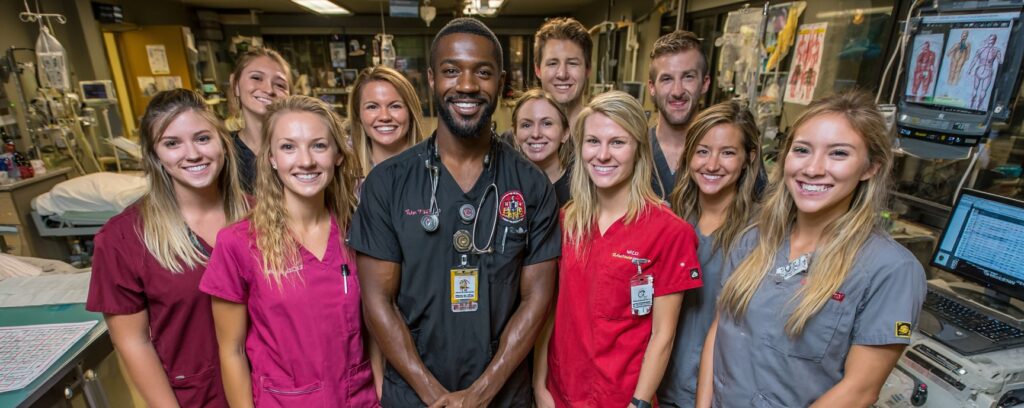
If you’re looking to change careers and become a registered nurse quickly, accelerated BSN (ABSN) programs can get you there fast—some in as little as 12 months. This guide highlights some of the fastest ABSN programs available in 2026, along with tips on how to choose the right one based on your goals, schedule, and readiness for an intensive academic experience.
What Defines the “Fastest” ABSN Programs?
A typical Accelerated Bachelor of Science in Nursing (ABSN) program takes 12 to 18 months to complete—already much shorter than the traditional four-year Bachelor of Science in Nursing. The fastest programs sit at the lower end of that range, often completing in 12 to 15 months through year-round coursework, condensed terms, and streamlined clinical scheduling.
What Makes a Program “Fast”?
Several factors influence how quickly students can complete an ABSN program:
- Transfer of prior credits: Students who’ve met all prerequisite requirements before admission can focus solely on nursing courses.
- Condensed course schedules: Many of the fastest programs operate on trimester or block systems, allowing students to progress through material more efficiently.
- Year-round academic calendars: Schools that minimize breaks between terms enable students to finish sooner without sacrificing required coursework or clinical hours.
These elements allow students to complete their nursing education more rapidly than standard pathways. For a broader view of high-quality accelerated nursing programs, you can review lists of the top ABSN programs nationwide.
Pros and Cons of Choosing a Fast ABSN Program
Choosing one of the fastest ABSN programs can be an exciting opportunity for students eager to enter the nursing field quickly—but it also comes with unique challenges. Understanding both the advantages and drawbacks will help you decide whether an accelerated timeline aligns with your goals and learning style.
Pros
Quicker workforce entry:
Finishing your degree in 12 to 15 months allows you to become a registered nurse much sooner, shortening the time between school and full-time employment.
Lower living and opportunity costs:
Because these programs are shorter, you’ll spend less on living expenses and can begin earning a nurse’s salary earlier than students in longer programs.
Maintains learning momentum:
Many second-degree students appreciate the fast pace, as it builds on their prior academic experience and keeps them continuously engaged without long breaks between terms.
Cons
Intense pace and workload:
The same qualities that make these programs fast also make them demanding. Students must manage a heavy schedule of lectures, labs, and clinical rotations with little downtime.
Limited ability to work:
Most schools advise against working while enrolled. The time commitment and academic load are equivalent to a full-time job—often more.
Requires full preparation and commitment:
Before starting, students need to have all prerequisites completed and personal responsibilities organized. Once the program begins, the pace leaves little room for adjustment.
For those who thrive under pressure and are ready for an accelerated learning experience, the fastest ABSN programs can offer an efficient and rewarding path to becoming a registered nurse.
Some of the Fastest ABSN Programs for 2026
While most accelerated nursing programs take 16 to 18 months to complete, some of the fastest ABSN programs finish in roughly 12 to 15 months. These programs combine rigorous academics, condensed scheduling, and year-round instruction to help students earn a Bachelor of Science in Nursing and prepare for the NCLEX-RN exam as quickly as possible.
Drexel University
Bachelor of Science in Nursing (Accelerated Career Entry)
Length: 11 months
Format: On campus
Drexel University’s Accelerated Career Entry (ACE) Bachelor of Science in Nursing program allows students to earn a BSN in just 11 months through a rigorous, full-time curriculum delivered in four consecutive 10-week terms. Designed for career changers and motivated learners, the program combines classroom instruction, advanced simulation training, and clinical rotations across hospitals and healthcare systems in Pennsylvania, New Jersey, and Delaware. Students benefit from integrated NCLEX preparation, expert faculty mentorship, and unique immersion experiences in specialties such as perioperative and nephrology nursing. Graduates achieve strong employment outcomes, with 90% working full-time and a 97% NCLEX pass rate among first-time test takers. Drexel University is a private research university located in Philadelphia, Pennsylvania.
Edgewood College
Post-Baccalaureate Accelerated Bachelor of Science in Nursing
Length: 12 months
Format: On campus
Online Post-Baccalaureate Accelerated Bachelor of Science in Nursing
Length: 12 months
Format: Hybrid
Edgewood University offers two accelerated pathways to a Bachelor of Science in Nursing (BSN) through the Henry Predolin College of Health Sciences—an in-person ABSN and an online ABSN. Both are 12-month programs designed for students who already hold a non-nursing bachelor’s degree and seek a fast, rigorous route to becoming registered nurses. The in-person ABSN features immersive classroom instruction, 600 hours of clinical experience, and one of the nation’s lowest student-to-faculty ratios (7:1), while the online ABSN blends flexible online coursework with three required on-campus lab immersions in Madison, Wisconsin, and coordinated clinical placements near students’ home regions. Each program boasts a 99% NCLEX-RN pass rate, strong clinical partnerships, and guaranteed admission into Edgewood’s MSN programs for graduates who meet GPA requirements. Edgewood University is a private, Catholic institution located in Madison, Wisconsin.
Nebraska Methodist College
Accelerated Nursing Degree Program
Length: 12 months
Format: On campus
Nebraska Methodist College’s Accelerated Bachelor of Science in Nursing (ABSN) program enables students with a non-nursing bachelor’s degree to earn a BSN in just 12 months through an intensive, full-time curriculum. The program combines academic rigor with extensive clinical training, offering state-of-the-art labs, a supportive cohort model, and experienced faculty committed to student success. With a strong NCLEX-RN pass rate of 96–100% and 96% of graduates employed within six months, the program prepares students for diverse nursing roles in hospitals, clinics, schools, and community health settings. Accredited by the Commission on Collegiate Nursing Education (CCNE), Nebraska Methodist College is a private, nonprofit institution located in Omaha, Nebraska.
Queens University of Charlotte
Accelerated Bachelor’s in Nursing
Length: 12 months
Format: On campus
Queens University of Charlotte’s Accelerated Bachelor of Science in Nursing (ABSN) program offers a fast-paced, one-year path for students who already hold a bachelor’s degree or are completing their final undergraduate semester. Delivered through the Presbyterian School of Nursing, the program spans three consecutive semesters and 61 credit hours, combining classroom instruction with immersive clinical experiences and individualized faculty support. Students gain comprehensive preparation in medical-surgical, pediatric, mental health, and community health nursing, as well as applied informatics. Most graduates secure nursing positions before graduation, entering the workforce ready to deliver compassionate, evidence-based care. Queens University of Charlotte is a private university located in Charlotte, North Carolina.
Salisbury University
Second Degree B.S.N.
Length: 12 months
Format: On campus
Salisbury University’s Second Degree Bachelor of Science in Nursing (BSN) program offers an accelerated path for students who already hold a non-nursing bachelor’s degree and want to enter the nursing profession. The program can be completed in either 16 months (three traditional semesters) or an intensive 12-month “fast-track” format, combining classroom instruction with extensive clinical experiences across regional healthcare facilities. Designed to recognize prior academic and professional experience, the curriculum provides a focused, full-time pathway to RN licensure and NCLEX-RN readiness. Students benefit from individualized faculty advising, flexible prerequisite options, and hands-on learning guided by Salisbury’s experienced nursing faculty. Salisbury University is a public institution located in Salisbury, Maryland.
University of Mississippi
Accelerated BSN Program
Length: 12 months
Format: On campus
The University of Mississippi Medical Center’s Accelerated Bachelor of Science in Nursing (ABSN) program offers a 12-month pathway for students who already hold a bachelor’s degree in another field and want to transition into nursing. This full-time, three-semester program blends classroom instruction with extensive hands-on clinical experience across multidisciplinary healthcare settings, preparing students for RN licensure and advanced study opportunities. Offered at both the Jackson campus and the Oxford instructional site, the program provides two distinct learning environments while maintaining the same rigorous, accredited curriculum. The ABSN program is approved by the Commission on Collegiate Nursing Education (CCNE). The University of Mississippi Medical Center is a public academic health sciences institution located in Jackson, Mississippi.
University of Rochester
Accelerated Bachelor’s in Nursing (ABSN) Program
Length: 12 months
Format: On campus
The University of Rochester’s Accelerated Bachelor’s in Nursing (ABSN) program offers a flexible pathway for students with a non-nursing bachelor’s degree to earn a Bachelor of Science with a major in nursing in either 12 months (full-time) or 24 months (part-time). Students complete 49 nursing credits and more than 650 clinical hours in specialties such as medical-surgical, obstetrics, pediatrics, and psychiatry—many of which take place at the University of Rochester Medical Center, located just steps from the School of Nursing. The program boasts a 100% NCLEX-RN pass rate and provides extensive clinical, academic, and career support to prepare graduates for success in diverse healthcare environments. The University of Rochester is a private research university located in Rochester, New York.
University of St. Thomas (Houston)
Accelerated BSN
Length: 12 months
Format: Hybrid
The University of St. Thomas in Houston offers a 12-month Accelerated Bachelor of Science in Nursing (ABSN) program for students who already hold a non-nursing bachelor’s degree or prior college credits. This hybrid program combines online coursework with hands-on skills labs and clinical rotations at healthcare facilities across the Houston area, providing a flexible yet rigorous path to becoming a practice-ready nurse. With start dates in January, May, and August, students can begin their nursing education year-round while learning from experienced faculty committed to holistic, patient-centered care. The University of St. Thomas is a private Catholic university located in Houston, Texas.
How to Evaluate Fast ABSN Programs
Choosing among the fastest ABSN programs requires more than simply comparing timelines. While program length is an important factor, accreditation quality, NCLEX pass rates, and overall student support can make a significant difference in your success and readiness for nursing practice.
Check Accreditation
Ensure the program is accredited by either the Commission on Collegiate Nursing Education (CCNE) or the Accreditation Commission for Education in Nursing (ACEN). Accreditation verifies that the curriculum meets national standards and that graduates are eligible for RN licensure and future graduate study.
Compare NCLEX Pass Rates
High NCLEX-RN pass rates are a strong indicator of program quality. Schools that consistently outperform national averages demonstrate effective teaching, clinical preparation, and student support.
Understand the Format
The fastest programs are often hybrid or fully in-person, combining online theory courses with on-site labs and clinicals. Be sure to evaluate your learning style and availability for required in-person components before enrolling.
Research Clinical Placement Logistics
Clinical experiences form the foundation of nursing education. Ask each school about placement partnerships, supervision standards, and support for arranging local clinical sites if the program is hybrid or out of state.
Evaluate Cost and Financial Aid
Accelerated programs can be more expensive per credit, but their shorter duration may reduce overall living expenses. Review total program cost, including tuition, fees, and materials, and explore financial aid or scholarships available to second-degree students.
Review Student Support Services
The demanding pace of the fastest ABSN programs means academic and personal support is crucial. Look for schools offering dedicated advisors, tutoring, mental health resources, and NCLEX preparation tools.
When comparing options, balance speed with quality—choosing a well-supported, accredited program will ensure your fast-track journey to RN licensure is both efficient and effective.
Frequently Asked Questions (FAQ)
Are faster ABSN programs better than longer ones?
Not necessarily. The fastest ABSN programs appeal to students who are academically prepared and ready for an intensive schedule. These programs cover the same material as longer ABSNs but in a shorter timeframe. However, the pace can be challenging, so it’s important to choose based on your learning style and personal commitments rather than speed alone.
Can I work during a 12-month ABSN program?
In most cases, no. The workload in a 12-month program is equivalent to a full-time job, with classes, labs, and clinical rotations scheduled throughout the week. Working even part-time can be difficult to manage, and many schools discourage it to ensure academic success.
What prerequisites do I need before applying?
Typical prerequisites include anatomy and physiology, microbiology, chemistry, nutrition, statistics, and human growth and development. Each school may have slight variations, so review program requirements carefully before applying to any of the fastest ABSN programs.
Do fast programs meet the same clinical hour standards?
Yes. Accelerated timelines do not reduce the required number of clinical hours, which generally total between 600 and 800+ across specialties such as medical-surgical, pediatrics, maternity, and community health. The hours are simply completed over a shorter period with more intensive scheduling.
How are accelerated program graduates viewed by employers?
Graduates of accredited accelerated programs are regarded equally to those from traditional BSN programs. Employers recognize that the fastest ABSN programs meet the same educational standards and produce capable, well-prepared nurses who often bring valuable prior academic or professional experience to their new roles.
Next Steps: Choosing the Right Fast ABSN Program
If you’re eager to begin your nursing career through one of the fastest ABSN programs, taking a few practical steps now can make your transition smoother and more strategic.
Shortlist 3–5 Programs
Start by identifying several programs that match your preferred timeline, learning format, and geographic location. Pay close attention to details like start dates, cohort sizes, and clinical site availability.
Verify Accreditation and Outcomes
Confirm that each program is CCNE- or ACEN-accredited and review recent NCLEX pass rates. Accreditation ensures program quality, while strong pass rates demonstrate that graduates are well-prepared for licensure.
Connect with Admissions Teams
Reach out to admissions representatives early to clarify prerequisites, application deadlines, and clinical placement expectations. Many schools also host online information sessions where you can speak directly with faculty and current students.
Plan Prerequisites and Finances
Make sure all required science and general education courses are complete before applying. Then, evaluate tuition, fees, and financial aid options, including scholarships or grants for second-degree students.
Apply Strategically
Because fast-track ABSN programs are competitive, consider applying to more than one school. Submitting strong, early applications—including thoughtful personal statements and recommendation letters—can improve your chances of acceptance.
By carefully comparing your options and preparing in advance, you can confidently select one of the fastest ABSN programs that aligns with your goals—and take the next step toward becoming a registered nurse sooner than you thought possible.